Quick Summary
Three mistakes cost Central Texas waterfront sellers more money than anything else: hiring an agent who does not know the body of water the home sits on, pricing to win the listing instead of pricing to sell, and spending money on the wrong improvements before going to market. A lake house marketed under the wrong water body quietly disappears from the saved searches most buyers actually use, which can shrink the buyer pool to a fraction of what it should be. Overpricing burns the first five or six weeks on market, and that window is the only real first impression a listing ever gets. Meanwhile, the repair list most sellers walk in with rarely matches the short list that actually moves the sale price. Below, our team — Hunter Croan, Frank Baker, and Hagan Cohle walks through each mistake with real Central Texas examples, including one listing that has now been on and off the market for more than a year chasing a number it was never going to get.
Mistake One: Hiring an Agent Who Does Not Know the Water
This one sounds too basic to be real. It is not. It happens on close to a daily basis across the Guadalupe Lakes and the Highland Lakes.
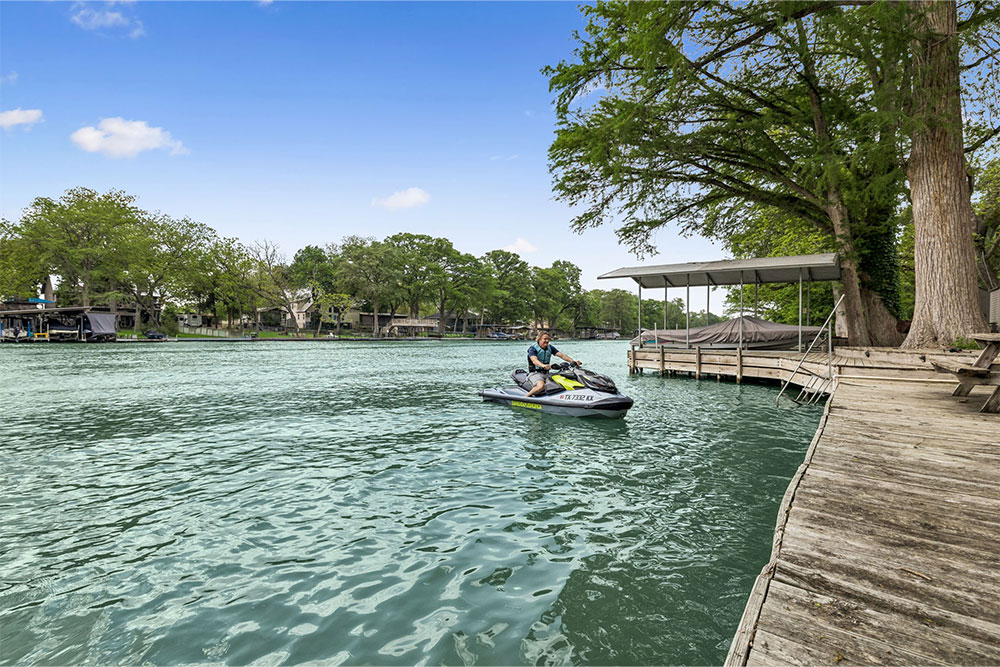
Here is the setup. We sit on Lake Dunlap, which is an impoundment of the Guadalupe River. If a listing agent does not understand that this stretch of water is Lake Dunlap and not open river, the property gets entered into the MLS as Guadalupe River frontage. The home is still on Lake Dunlap. The marketing says otherwise.
It is not limited to the Guadalupe chain. We see Lake LBJ homes entered as Colorado River. We see Lake Travis homes entered as Colorado River or Pedernales River. There is currently an eleven million dollar home on Lake Austin listed as Colorado River frontage. Technically the water is fed by the Colorado. Practically, no buyer shopping Lake Austin will ever lay eyes on that listing.
Our team combs through every new waterfront listing that hits the market to verify it is attached to the correct body of water, because it directly affects what our buyers see. At any given time we are tracking roughly a hundred homes across the Guadalupe Lakes and Highland Lakes that are marketed on the wrong water.
Why the Wrong Water Body Makes a Listing Invisible
Modern buyers do not browse. They set up a saved search and wait for the alert.
If a buyer has a Lake Dunlap search saved on our site, on Zillow, or on Realtor.com, and a Lake Dunlap home is entered as Guadalupe River, that buyer will never receive the alert. Not on day one, not on day ninety. The listing simply does not exist in their world.
The practical result is that a seller ends up exposed to a small slice of the buyers who should be seeing the home. That is not a marketing inefficiency. That is the difference between multiple offers and six months of silence.
Hunter Croan, who founded The Lakefront Group and grew up on these lakes, built the daily listing audit specifically because this problem kept costing sellers real money and almost none of them ever found out why.
Mistake Two: Pricing to Win the Listing Instead of Pricing to Sell
There are two ways an overpriced waterfront listing happens. Sometimes the agent honestly does not know what the property is worth. Sometimes the agent knows exactly what it is worth and takes the listing anyway.
The second version is more common than most sellers realize. An overpriced sign in a waterfront yard is free billboard space. Buyers call about the overpriced home, the agent explains that the seller picked the number, and then shows them something else down the road that is priced to sell. The listing agent collects buyer leads. The seller collects showings that go nowhere.
We are in the business of selling listings, not collecting them. Frank Baker, our lead listing agent and a Certified Residential Real Estate Appraiser since 2000, tracks his numbers closely. Over the last two years his list price to sales price ratio has run right around 96 percent, and the rest of our listing side lands in the same range. That is what pricing to sell looks like in practice. We walk through more of Frank's approach, including how he handles pushback on price, in How To Negotiate the Best Price When Selling Your Lakefront Property.
The trap for sellers is picking an agent based on the number said at the kitchen table. The highest listing presentation number is very often the least reliable one, because it costs the agent nothing to say and costs the seller months to unwind.
The First Five or Six Weeks Are the Only First Impression You Get
Peak activity on any listing happens the moment it hits the market. You are the new listing. You are the shiny new object. Every buyer with a saved search sees you at once, and every agent working that lake gets the alert.
That window runs roughly five to six weeks. If the price is wrong during those weeks, you do not get to run the window again.
A reduction at week six, month six, or year one does not reset anything. It just converts the listing from new to stale, and stale waterfront listings tend to sell below what they would have brought if they had been priced correctly on day one.
What Overpricing Actually Costs: A Real Central Texas Example
A seller down the street from us wanted to list at 1.3 million. Frank ran the numbers and recommended 999,000. He told them we were not willing to take the listing above that, because we knew where it was going to end up and we knew who would get blamed.
They went with another agent who agreed to the higher number.
Here is the timeline since. The home worked through a series of slow reductions and expired at 975,000. It came back on the market at 1.1 million. It is now back down to 975,000 and still not under contract.
We had buyers interested in that property at a realistic number. Listed correctly at 999,000 out of the gate, it may well have drawn multiple offers in the first month. Instead the seller has spent more than a year on the market to arrive below the price we recommended before any of it started.
If you want to go deeper on the mechanics of getting a waterfront home sold quickly, we broke that down in 3 Important Levers That Will Help You Quickly Sell a Lake House in Texas.
Waterfront Does Not Comp Like Anything Else
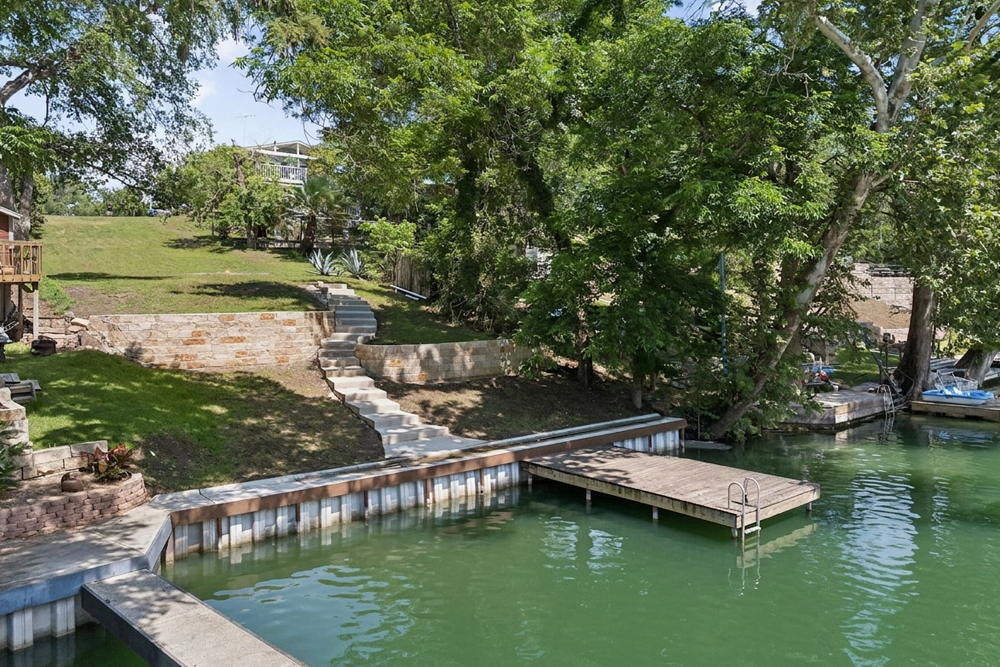
There is nothing cookie cutter about pricing on the water. Take any three homes in a row on the same lake. Water depth, cove position, shoreline usability, elevation and slope to the water, dock configuration where docks are allowed, view corridor, boat traffic, and floodplain relationship can all differ meaningfully house to house.
An agent who works mostly subdivision inventory does not have a framework for adjusting between those variables. So the comps get selected loosely, the adjustments get skipped, and the number comes back skewed high. Then the seller hears that number, likes it, and the clock starts running.
Hagan Cohle, who works the buyer side across the Guadalupe Lakes and rivers and holds a Finance and Economics degree, sees the other end of this constantly. Buyers hesitate to write an offer three, four, or five hundred thousand below list because they do not want to insult the seller. So the offer never gets written at all. Overpricing does not just fail to attract the right buyer. It actively suppresses offers that would otherwise land.
For broader pricing context by lake, see How Much Does a Texas Lake House Cost and Central Texas Lake House Market Trends for 2026.
Mistake Three: Spending Money on the Wrong Things Before You List
Every waterfront property is different, so there is no universal punch list. What we can tell you is that the list a seller walks in with almost never matches the list that actually moves the sale price.
Hunter’s approach on the listing side is simple. We only recommend work that puts more money in your pocket than it costs to do.
Open up the water view. Our tree guys love us. A buyer shopping a lake house wants to see the water from inside the house and from the yard. Lifting the tree canopy is one of the cheapest, highest-return moves on the entire list. We have had sellers lift the canopy, walk back onto their own patio, look at the view they had forgotten they owned, and pull the listing because they decided not to sell after all. That is how big the difference can be. For a longer list of pre-listing projects worth the money, see 7 Waterfront Home Improvements That Boost Your Property Value.
Fix the thing that contradicts the rest of the house. Hunter listed a home on Lake McQueeney that was roughly 5,500 square feet on a double lot with 160 feet of main lake frontage, a casita, fifteen foot ceilings, and strong curb appeal. Then you walked into the primary bath and hit bright green Formica countertops that belonged to a completely different house. The seller resisted, worried a future buyer might not like whatever replaced it. The honest answer was that a future buyer definitely did not like what was already there. Hunter was the third listing agent on that home, because the first two had told the seller what he wanted to hear.
Listen to showing feedback and act on it. Billy Stephens and Brooke LeMond closed a Lake LBJ home together that was priced correctly from the start but sat through a strange stretch of market following the July 2025 high water event. Rather than reflexively cutting price, they went back through every piece of showing feedback that December. The kitchen kept coming up. The sellers did a full kitchen remodel, and buyers who had walked the home the previous June came back and said that was the one they wanted. The remodel recovered its full cost and roughly seventy thousand dollars on top of it.
Billy’s decade in building materials sales before real estate is a real advantage here. He can look at a kitchen, a deck, or an exterior and tell a seller what the work will realistically cost before anyone calls a contractor.
Marketing Is Not “Put It in the MLS and Hope”
Getting the most money for a waterfront property comes down to getting the most qualified eyeballs on it. One MLS entry and a prayer is not a marketing plan.
Our listings go into the Central Texas MLS, SABOR, ABOR, and the Highland Lakes MLS, and they feed to the Houston MLS as well. That is five systems reaching five different pools of agents and buyers.
Beyond that, there is a meaningful network of agents working the Guadalupe Lakes and Highland Lakes who are not members of any of those MLSs. Hunter keeps track of those agents and communicates with them directly. That is also the engine behind our off-market and non-MLS access, which we covered in The Importance of Access to Off-Market Properties.
The proof shows up quickly. Billy took over a Lake Buchanan listing as the third listing agent, after two previous agents failed to sell it and generated roughly one showing between them. He repriced it where it needed to be, put real marketing behind it, had five showings, and had it under contract in ten days.
Work With Central Texas Waterfront Specialists
Selling on the water is not a traditional real estate transaction. The value drivers are different, the buyer pool is different, and the ways a listing can quietly fail are different.
The Lakefront Group was built around that reality. Hunter Croan grew up on Lake McQueeney and has lived on Meadow Lake, Lake Placid, and now Lake Dunlap. Frank Baker brings appraisal discipline to seller pricing across the Guadalupe Lakes, backed by nearly thirty years in the New Braunfels and Canyon Lake area. Hagan Cohle works the buyer side across the Guadalupe Lakes and rivers. Billy Stephens and Brooke LeMond cover the Highland Lakes, where Brooke has sold Lake Travis waterfront for her entire career and Billy brings construction cost insight to pre-list decisions.
If you are thinking about selling, the most valuable conversation you can have is the one before you pick a price and before you spend a dollar on improvements.
Waterfront Seller FAQs
Why does the body of water listed on my lake house matter so much?
Because most buyers shop through saved searches and automated alerts rather than browsing. If your Lake Dunlap home is entered as Guadalupe River, every buyer with a Lake Dunlap search saved will never be notified that it exists. The home is not competing at a disadvantage. It is not competing at all for a large share of its natural buyer pool.
How do I know if my lake house is priced correctly?
Look at how the agent arrived at the number, not just the number itself. Ask which comparable sales were used, how they were adjusted for water depth, shoreline usability, view, and elevation, and what the agent’s own list price to sale price track record looks like. A number offered without that supporting work is a guess, and on waterfront the guesses skew high.
My lake house has been on the market for months. Should I just reduce the price?
Possibly, but reduce for the right reason. Before cutting, confirm the listing is attached to the correct body of water and appearing in the searches it should be, and read the showing feedback carefully. If the feedback consistently names one issue, addressing it may be more productive than another reduction. If the feedback is thin because showings are thin, the problem is usually exposure or price, and you need to know which.
What improvements are actually worth making before listing a waterfront home?
The highest return item on most Central Texas lake properties is opening up the water view, which usually means lifting the tree canopy. After that, the priority is fixing anything that contradicts the quality level of the rest of the house, like a dated kitchen or bathroom in an otherwise high end home. Buyers forgive a house that is consistently modest. They struggle with one that is inconsistent.
Will I recover the cost of a pre-listing renovation?
It depends entirely on the property and what the specific renovation addresses. A remodel that removes the single objection buyers keep naming in showing feedback can return its cost and more. A remodel chosen without that evidence often does not. This is why we ask sellers to meet with a listing agent (preferably from The Lakefront Group) before spending money, not after.
Do I really need a waterfront specialist, or will any good agent work?
A strong general agent can handle the contract and the transaction. What they usually cannot do is comp a property where value swings on water depth, cove position, shoreline usability, and floodplain relationship, or catch a data entry error that hides your listing from the buyers most likely to want it. It is the same gap Hagan sees from the buyer side every week. On the water, those two things drive the outcome more than almost anything else.
Ready to Sell Your Waterfront Home?
Before you pick a price, before you call a contractor, and before you sign a listing agreement, have a conversation with an agent who knows your specific body of water.
The Lakefront Group specializes in waterfront and riverfront real estate across Central Texas, including Canyon Lake, Lake McQueeney, Lake Dunlap, Lake Placid, Lake Seguin, Lake Travis, Lake LBJ, Lake Austin, Lake Buchanan, Inks Lake, Lake Marble Falls, and the Guadalupe, Comal, Blanco, San Marcos, Colorado, and Pedernales Rivers.
Reach out and let’s talk about what your property is actually worth and what it will take to get it sold. We’ll see you on the water.