
Quick Summary
Water levels move differently on every Central Texas lake, and that movement has a real, measurable effect on what Central Texas waterfront property is worth. Constant level lakes like Lake LBJ and Lake Austin carry a built in premium because buyers know the water will be there every summer, while lakes like Lake Travis, Lake Buchanan, and Canyon Lake rise and fall with rainfall and can leave some coves dry for months or even years. That does not make those properties bad investments, it just means buyers need accurate, lake specific information before they make an offer. In this post, Hunter Croan, Brooke LeMond, Hagan Cohle, and Billy Stephens of The Lakefront Group explain how lake levels actually affect value, what to check before buying on a fluctuating lake, and why some of the best opportunities right now are sitting in coves that look empty.
It’s Not Just a View, It’s a Lake’s Personality
Every lake in Central Texas behaves a little differently, and that behavior matters more to your investment than most buyers realize. Some lakes hold a constant, managed level year round. Others rise and fall with rainfall, drought, and how upstream dams are operated. Buying waterfront without understanding which kind of lake you are looking at is one of the most common ways buyers end up disappointed, or end up walking away from a property that was actually a great opportunity.
“We’re not trying to be a killjoy when a buyer is excited about a property,” said Hunter Croan, founder of The Lakefront Group. “We’re telling people what we know from working these lakes every day. An agent who doesn’t understand the difference between a constant level lake and a fluctuating one will just say yes to everything, and that can cost a buyer a lot of money down the road.”
Why Constant Level Lakes Command a Premium
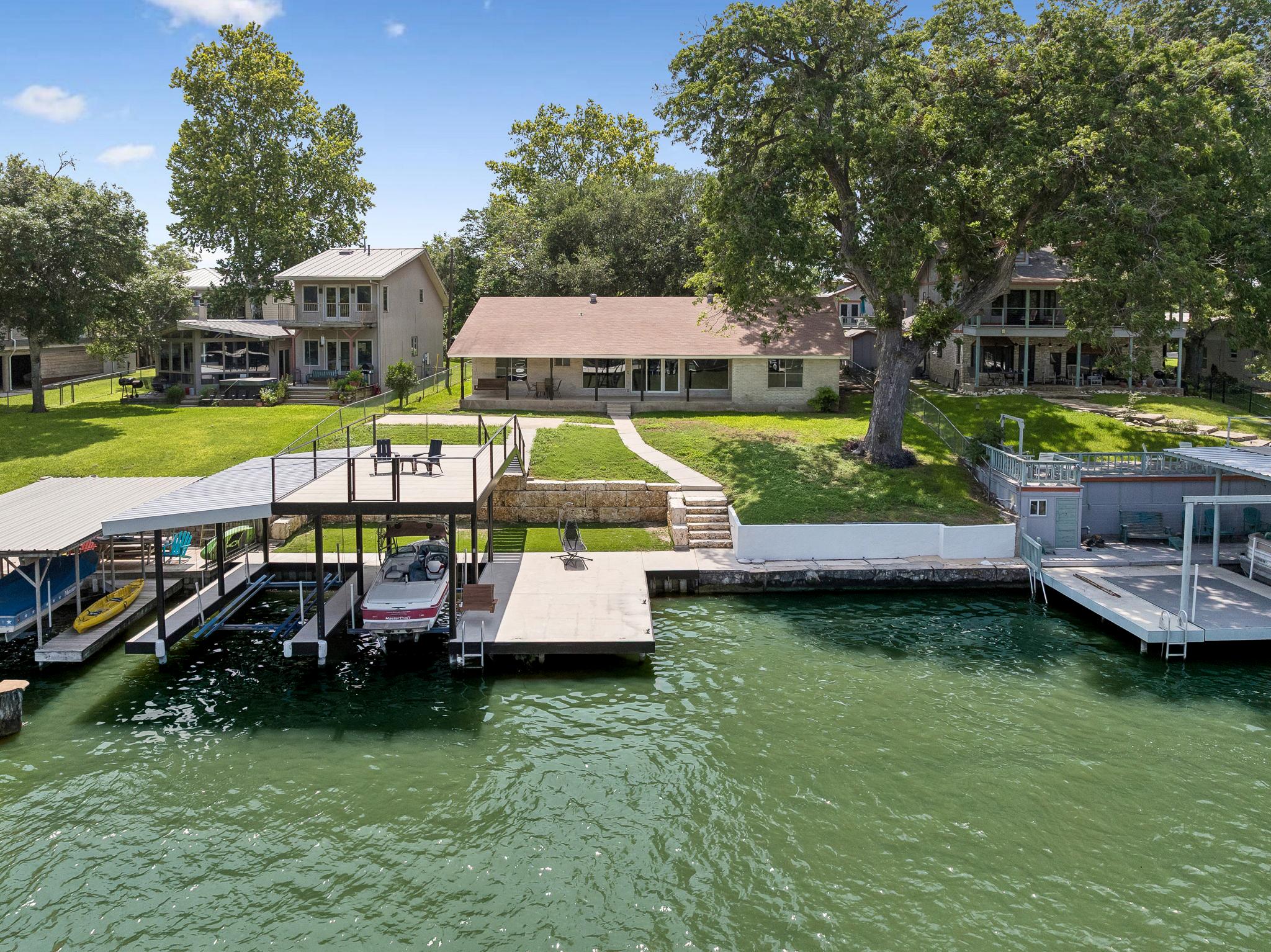
Lake LBJ and Lake Austin are two of the few Highland Lakes that maintain a steady water level year round, regardless of drought conditions on the rest of the chain. That consistency shows up directly in pricing.
Hagan Cohle, who brings a Finance and Economics background to The Lakefront Group’s buyer-side analysis, points out that the premium buyers pay for guaranteed water is bigger than most people expect. Knowing a lake house will be fully usable every single summer, with no risk of a dry dock or an unusable shoreline, is worth real money to buyers, and it shows up consistently in how these properties are priced compared to fluctuating lakes nearby.
Canyon Lake: Reading a Down Cycle the Right Way
Canyon Lake is a good example of how lake levels create both risk and opportunity. As a Guadalupe Lakes specialist, Hagan Cohle has spent years showing property there through both full and low water years.
“Canyon Lake is historically one of the more consistent of the non-constant level lakes,” Hagan explained. “It just hasn’t gotten rain in the right spot the last few years. Some of the coves that are dry right now had homes selling for over a million dollars not long ago, and those same homes are priced significantly lower today.” For buyers comfortable with that timeline, Hagan sees it as one of the stronger value opportunities on the Guadalupe Lakes right now, with real upside once levels return and hold for a few consecutive years.
It also helps that boat docks are not permitted on Canyon Lake to begin with. Owners already keep their boats in a marina rather than at a private dock, so a low water year does not cut off access the way it can on a lake where docks sit directly off the property. For a deeper look at how the lake’s history factors into ownership, read our breakdown of Canyon Lake flowage easements and the 948 line, and see how Canyon Lake compares to Lake Buchanan if you’re weighing both.
Lake Travis and the Pedernales: When Coves Go Dry
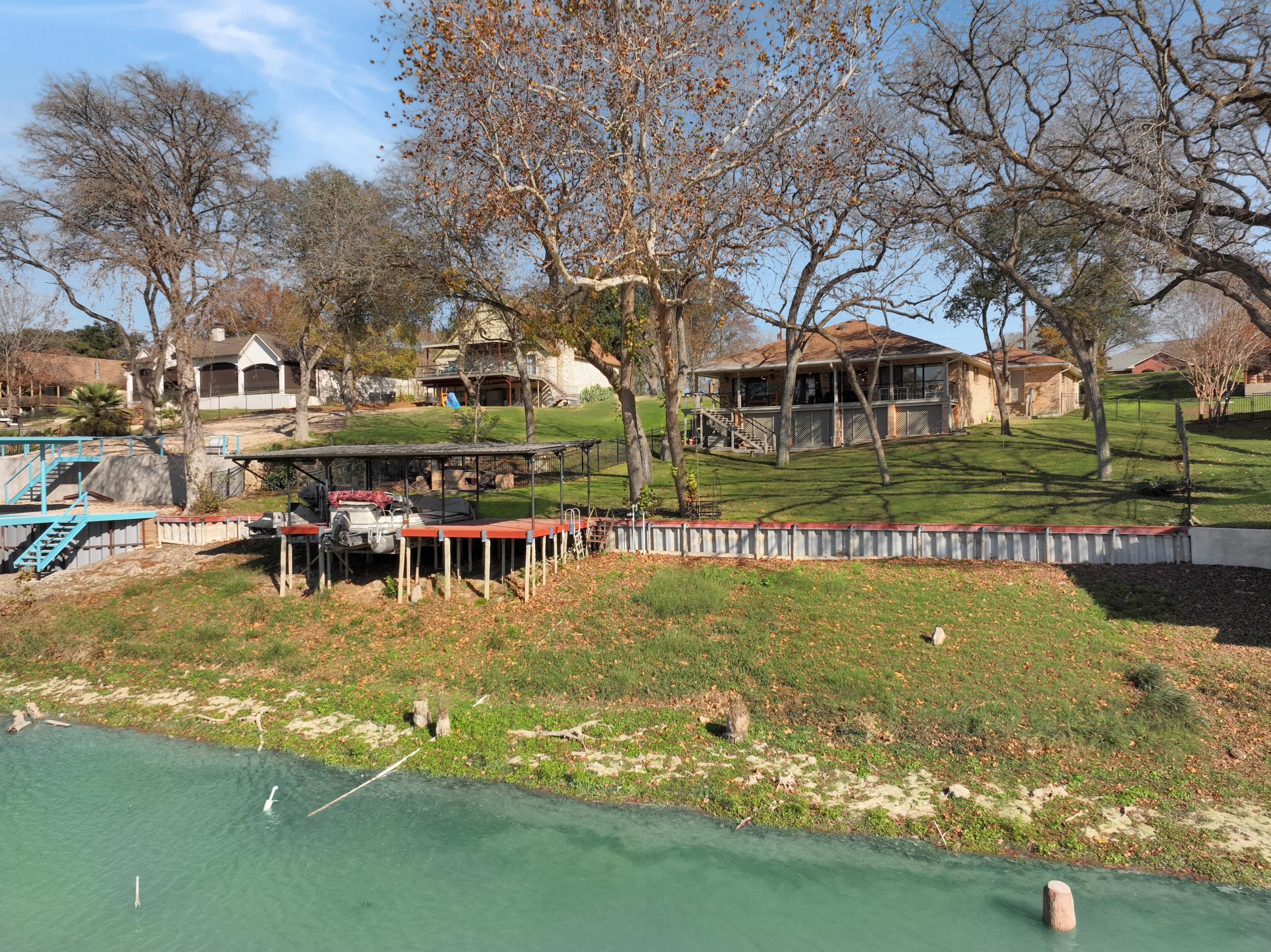
On Lake Travis and the Pedernales River, water level swings can be more dramatic, and certain coves can go completely dry depending on conditions. Brooke LeMond, who has sold waterfront on Lake Travis throughout her entire career and spends much of her own personal time on the lake, recently worked with a buyer planning to purchase now and build in a few years.
“He sent me a list of properties he was considering, and I had to tell him plainly, that one will go dry, that one has been dry, steer clear of this one,” Brooke said. “He told me that was exactly why he wanted to talk to a waterfront specialist first.” After narrowing the list to properties with reliable water, they moved forward with showings on the ones that held up.
Not every property on a fluctuating shoreline is a bad buy. As Brooke puts it, every property is sellable, it’s just a matter of price. A home on a section that occasionally loses water should be priced to reflect that, and a home with deep, reliable water year round should command a premium. Brooke recently toured a Lake Travis property in Lakeway with wide open views and water that never goes dry, priced just under three million dollars, a clear example of what reliable water is worth in that market.
You May Have More Access Than You Think
One thing buyers often overlook is that losing dock access does not always mean losing boat access. Many Lake Travis owners already keep their boats at one of the lake’s marinas rather than maintaining a private dock, simply because it is easier to manage. If a dock occasionally sits on dry ground during a low water year, a marina slip keeps the boating lifestyle intact regardless of what the shoreline is doing that season.
Lake Buchanan: The Upside of Buying Before the Rain Returns
Billy Stephens, who covers the Highland Lakes and Rivers for The Lakefront Group, sold a Lake Buchanan property last year where the water sat 400 feet from the house at the time of the showing. Three months later, after seasonal rains, the water was just 20 feet from the door.
“They got a really good buy on that house,” Billy said. “We knew historically the water came back, we just didn’t know it would happen that fast.” It is a good reminder that a dry view at the time of purchase is not always the full picture, and buyers willing to do their homework on a lake’s history can end up with both a strong price and a property that performs exactly as expected once conditions shift.
How to Check a Lake’s Water Level History Before You Buy
Before making an offer on a property along a fluctuating lake, it is worth looking at how that specific section of shoreline has behaved over time rather than relying on what it looks like the day you tour it. A simple way to start is by using Google Earth’s historical imagery tool, which lets you drag a timeline back year by year and see how full a lake, or a specific cove, has been over the past decade or more. It will not replace a local agent’s knowledge of dam operations, easements, and seasonal patterns, but it is a useful first step in understanding what you are actually buying.
For more on how this plays out across the region, see our full look at how lake levels affect property values in Central Texas.
Bottom Line: Yes, Lake Levels Matter When Buying a Lake House, But They Don’t Have to Scare You Off
Lake levels affect access, usability, and price, and ignoring that when you buy is one of the more expensive mistakes a waterfront buyer can make. But a fluctuating lake is not automatically a bad investment. It just means the property needs to be priced accordingly, and you need an agent who actually knows that lake’s history well enough to tell you the truth about it.
That is the role The Lakefront Group plays across every lake and river in Central Texas. Hagan Cohle works closely with buyers on the Guadalupe Lakes, including Canyon Lake, while Brooke LeMond and Billy Stephens bring that same local depth to the Highland Lakes and Rivers, including Lake Travis, Lake LBJ, Lake Buchanan, and the Pedernales River.
Lake Level FAQs
Does a low lake level mean a property will never have water again?
Not necessarily. Many Central Texas lakes, including Canyon Lake and Lake Buchanan, have a long history of refilling after drought once rainfall returns to normal. The key is understanding a specific section’s history rather than assuming current conditions are permanent. See our full guide on how lake levels affect property values for more on this pattern.
Which Central Texas lakes keep a constant water level?
Lake LBJ, Lake Austin, Lake Marble Falls, and Inks Lake are managed to hold a steady level year round, regardless of drought. The same is true of the smaller Guadalupe Lakes, including Lake Dunlap, Lake McQueeney, and Lake Placid, which are river fed and held at a constant pool by recently rebuilt, state of the art dams. Lake Travis, Lake Buchanan, and Canyon Lake fluctuate based on rainfall and reservoir management.
Can I still keep a boat if my dock goes dry during a low water year?
Often, yes. Many owners on fluctuating lakes keep their boats at a marina rather than a private dock, which keeps boating access intact even when shoreline conditions change seasonally.
How can I check a lake’s water level history before buying?
Google Earth’s historical imagery tool lets you scroll back through past years to see how a specific cove or shoreline has looked over time. Pairing that with a local agent’s knowledge of the lake’s dam history and seasonal patterns gives you a much fuller picture before you make an offer.
Is it a mistake to buy on a lake that sometimes runs low?
Not if the price reflects it. Properties on fluctuating shorelines can be priced well below comparable homes on constant level lakes, which creates real opportunity for buyers who understand the lake’s pattern and are comfortable with the timeline for water to return. Properties on non-constant level lakes that back up to deep water and keep water behind the house even in drought conditions tend to hold their value well.
What Central Texas lakes are best for waterfront property value?
Constant level lakes like Lake LBJ and Lake McQueeney tend to hold strong waterfront property values because buyers can count on year-round water access. Also, as mentioned above, properties on non-constant level lakes that back up to deep water and keep water behind the house even in drought conditions tend to hold their value well (similar to constant level lakes).That said, fluctuating lakes like Lake Travis and Lake Buchanan can offer excellent value when water levels are down for lake houses on shallower sections that can go dry but tend to recover well once conditions return to normal. The best lake for your investment depends on your timeline, your tolerance for seasonal variation, and how a specific property’s waterfront sits relative to the lake’s historical range.
Ready to find waterfront property that fits how you actually want to live on the water?
Whether you’re drawn to the guaranteed depth of Lake LBJ or you’re comfortable buying ahead of a Canyon Lake or Lake Buchanan rebound, The Lakefront Group can walk you through exactly what a property’s water level history means for your purchase. Contact The Lakefront Group to talk with a specialist who knows your lake.
Posted by Hunter C on
Leave A Comment