
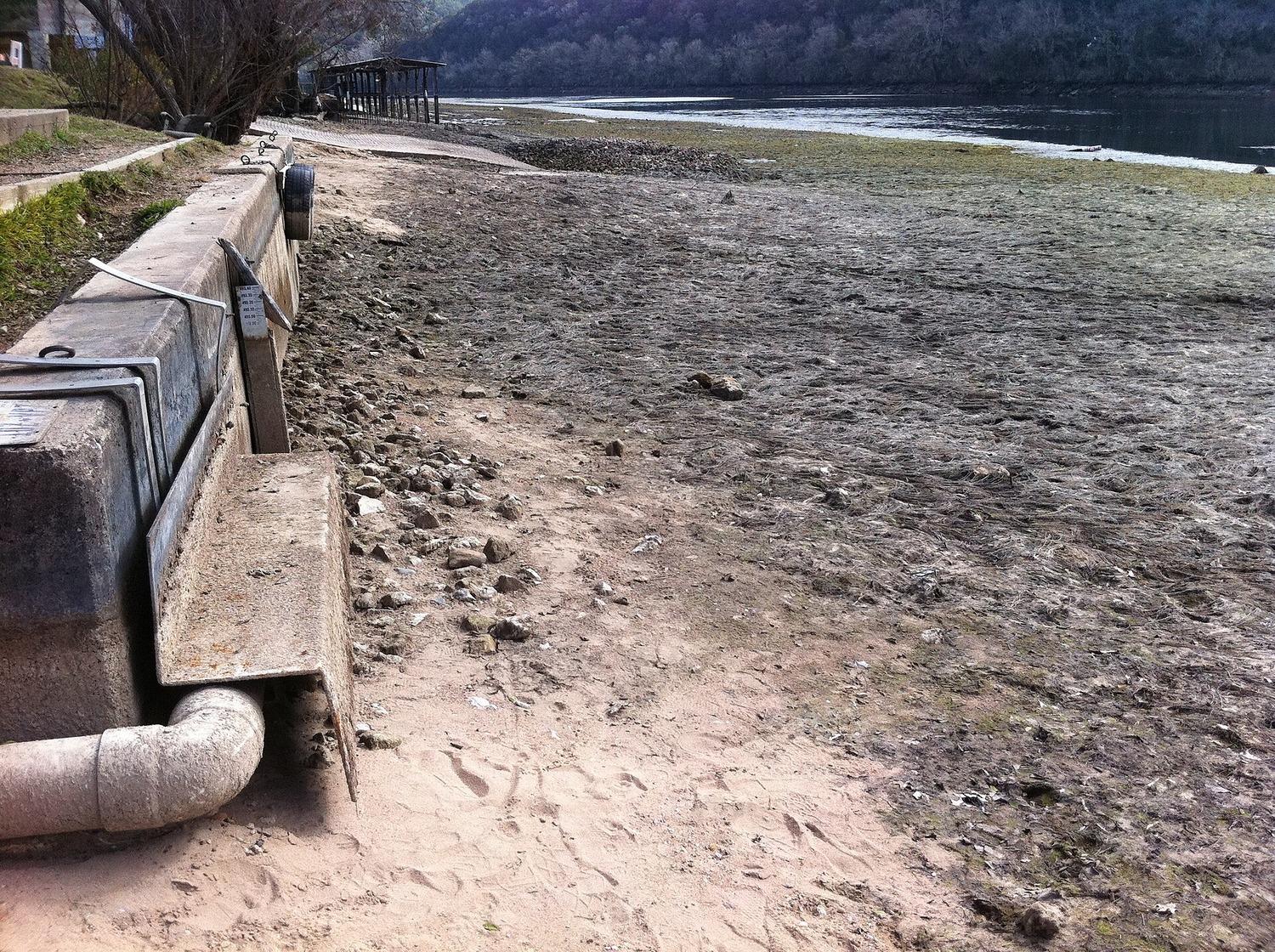
Lake Austin during a past winter drawdown (photo posted January 2011). The drawdown planned for fall 2026 has been canceled. Photo: iPhone Photography, CC BY 3.0, resized.
Quick Summary: The City of Austin canceled the 2026 Lake Austin drawdown on September 24, 2026. The lake was set to drop about ten feet from October 12 through November 30, but businesses on the lake pushed back over fall weddings, UT football, and Formula 1, and no other 2026 window worked. No new date has been set. The city has stopped accepting the special permit exemption it created for drawdown repairs, so anyone who filed one should confirm its status before scheduling work. Lake Austin stays at its normal level this fall: boat ramps stay open, sellers can list without timing photos around a low lake, and Lake Travis will not give up the nine inches the refill would have cost it.
Lake Austin is a constant-level lake, and a drawdown is the rare chance owners get to see what sits under their docks. This fall's drawdown would have been the first in nine years. For owners, buyers, and sellers of Lake Austin homes for sale, the Lake Austin drawdown cancellation changes some plans and leaves others exactly where they were. This post covers why it was canceled, what happens to drawdown permits, how to handle dock and shoreline work at normal lake level, and what it means for buying and selling.
Why the 2026 Lake Austin Drawdown Was Canceled
The City of Austin and LCRA had scheduled the drawdown for October 12 through November 30, 2026, lowering the lake about ten feet between Mansfield Dam and Tom Miller Dam. On September 24 the city announced it would not go forward. City staff heard concerns from businesses and groups along the lake about the fall wedding season and major events, including University of Texas football games and Formula 1 (City of Austin, September 24, 2026). One marina's businesses told the City Council the combined job loss would reach 200 jobs (CBS Austin, September 24, 2026).
The city looked for another window. LCRA offered December 1 through January 15, but businesses raised the same concerns about holiday activities and seasonal operations (KUT, September 25, 2026). Stakeholders asked for January and February 2027, which is when Lake Austin drawdowns used to happen. LCRA no longer holds winter drawdowns: since Winter Storm Uri in 2021, it keeps its hydroelectric generators on the Highland Lakes available to the Texas power grid during cold weather. With no workable option left, the city decided not to hold a drawdown in 2026 and said it will keep evaluating future drawdowns with LCRA and lake stakeholders (City of Austin, September 24, 2026).
What Happens to Drawdown Permits
The city created a special 2026 drawdown site plan exemption to fast-track minor dock and bulkhead repairs and slip sediment removal. It is no longer accepting those exemptions, though some projects that were already permitted may still go forward (KVUE, September 24, 2026). If you filed one, contact Austin Development Services before you schedule a contractor, and ask whether your approval still stands and whether the work can be done at normal lake level.
The city's standard rules did not change. As of September 2026, painting, staining, limited landscaping and lighting, and placing furniture need no permit. Simple re-decking, repair and maintenance of an existing structure with a building permit, and repairs to a legally built bulkhead that do not exceed 25 percent of it can go through a regular site plan exemption. Replacing load-bearing beams, piers, or pilings, adding walls, expanding a dock's footprint, placing anything below the water line, and demolition need a full site plan permit. Removing accumulated sediment from boat slips was allowed under the exemption only during the 2026 drawdown, so confirm with the city how that work is handled now before you plan it. Removing hydrilla or other nuisance vegetation still needs a Texas Parks and Wildlife permit.
Dock and Shoreline Work Without a Lake Austin Drawdown
The case for a drawdown is access. Brooke LeMond, one of our Highland Lakes specialists, was working waterfront during the 2017 Lake Austin drawdown, and the biggest benefit she saw for owners was being able to see and reach parts of their shoreline and dock structures that are normally underwater. Owners used it to make repairs, clean out around slips, check bulkheads and pilings, and handle maintenance that is much harder at normal lake level.
Hunter Croan, our owner, saw the same thing on Lake Dunlap in far less controlled circumstances. After the lake's spill gate failed in May 2019, it sat low for years while the dam was rebuilt (see our Texas lake construction updates). With the water gone, Hunter found holes in his retaining wall he never would have found with the lake up, and his neighbors teamed up to repaint the metal pipes on their boathouses that normally sit underwater, which makes those structures last much longer.
Without that window this year, most of the work on a Lake Austin dock happens from above the water. The parts owners can still check at normal level:
- The top of the bulkhead and the ground behind it, for cracks, sinking, or soil washing out
- Decking, railings, and the boathouse framing and roof
- Boat lift cables, motors, and cradles
- Hydrilla or other vegetation around the slip and swim area
- Trash and debris along the shoreline
If you need any boathouse or waterfront improvement or repair work, reach out to us for recommendations. Billy Stephens spent more than ten years in building materials sales before real estate and knows the people who do this work on the lake.
The Canceled Drawdown and Hydrilla
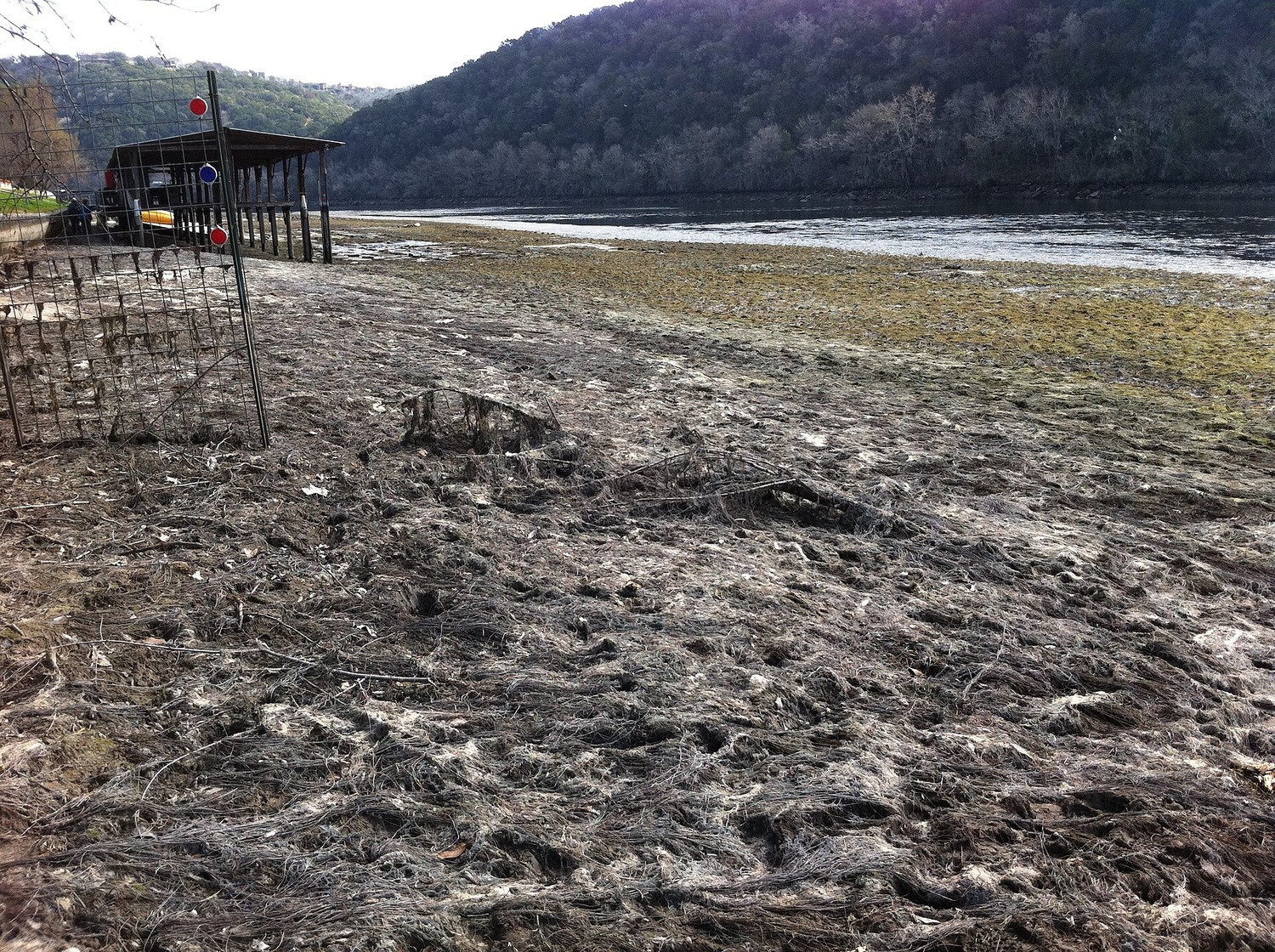
Dried aquatic vegetation on the exposed lakebed during a past Lake Austin drawdown (photo posted January 2011). Photo: iPhone Photography, CC BY 3.0, resized.
Hydrilla was part of the reason owners asked for a drawdown, but a drawdown was never going to control it; the roots survive and the plant comes back. What owners lose is easy access to the lake bed around their docks. The tools that work are unchanged: the city's sterile grass carp program across the lake, and mechanical removal or bottom barriers at the dock under a TPWD permit, which contractors do at normal lake level. Our Lake Austin hydrilla guide covers where it is growing and how owners are managing it.
Buying a Lake Austin Home This Fall
A drawdown would have given buyers an unusual look at what normally sits underwater. Without one, due diligence works the way it always does on a constant-level lake. Walk to the end of the dock and look down. Check the visible bulkhead and the ground behind it. Ask the seller what dock, bulkhead, and slip work has been done, when, by whom, and whether it was permitted, and ask to see the permits. Bring your inspector, and if the dock is a big part of the purchase, have a dock contractor look at it before your option period ends. Our post on costly lakefront buying mistakes covers the rest of the water-related checklist.
The upside for buyers is that the lake will look the way it normally does. There is no need to schedule a second look after a refill.
Selling a Lake Austin Home This Fall
The cancellation makes timing simpler for sellers. The lake will be at its normal level through the fall, so listing photos and video can be shot any time. What still matters is the water in front of the house: a clean dock, a sound bulkhead, and a slip clear of hydrilla show better than any photo angle. A seller who can show recent, permitted waterfront work is also in a stronger negotiating position.
How a Lake Austin Drawdown Works
When the next drawdown is scheduled, the mechanics will likely look like this year's plan. LCRA lowers the lake no more than about a foot a day, holds it about ten feet below normal for several weeks, and refills it from Lake Travis through Mansfield Dam, not from Lake Buchanan. The upper end of the lake can sit higher than the level measured at Tom Miller Dam when LCRA releases water from Mansfield. According to LCRA, the 2026 refill would have taken about 13,000 acre-feet and lowered Lake Travis about nine inches at August 2026 levels (KXAN, August 20, 2026). With the cancellation, owners looking at Lake Travis homes for sale will not see that drop. Lake Travis and Lake Buchanan are the region's water supply reservoirs and are designed to fluctuate; Lake Austin is not. Our Lake Austin vs. Lake Travis comparison explains how that difference shapes life on each lake.
Lake Austin Real Estate FAQs
Is the Lake Austin drawdown still happening?
No. The City of Austin canceled the October 12 through November 30, 2026 drawdown on September 24, 2026. Lake Austin will stay at its normal level this fall.
Why was it canceled?
Businesses and groups on the lake raised concerns about the fall wedding season, UT football, and Formula 1. LCRA's alternate window of December 1 through January 15 ran into the same concerns over holiday business, and LCRA no longer holds winter drawdowns so its hydroelectric generators stay available to the Texas grid.
When is the next Lake Austin drawdown?
No date has been set. The city says it will keep evaluating future drawdowns with LCRA and lake stakeholders. Check the City of Austin's Lake Austin page for updates.
I filed for the special drawdown permit exemption. What now?
The city is no longer accepting the special exemption, though some projects that were already permitted may still go forward. Contact Austin Development Services before scheduling work.
Can I still repair my dock or bulkhead?
Yes, at normal lake level and under the city's standard rules. Re-decking and minor repairs usually go through a site plan exemption plus a building permit; replacing pilings or load-bearing parts, expanding a dock, or demolition needs a full site plan permit. Removing hydrilla needs a TPWD permit.
Will Lake Travis still drop because of Lake Austin?
No. The refill would have come from Lake Travis and lowered it about nine inches, according to LCRA. With the drawdown canceled, that refill will not happen.
Talk to Our Lake Austin Specialists
Whether you were planning dock work around the drawdown, timing a sale, or shopping for a home on the water, our team can help you plan around a normal-level fall on Lake Austin. We work Lake Austin real estate from the water up, including Lake Austin waterfront lots, Lake Austin condos, and the Tarrytown, Steiner Ranch, and West Lake Hills markets around the lake. Call us at 830.253.5253, contact us online, or sign up for Lake House Alerts to see new listings and off-market opportunities as they come available.
Posted by Hunter Croan on
Leave A Comment