
Quick Summary
Choosing between a lake house and a river house comes down to lifestyle. Lake properties typically offer more boating, water sports, and dock access, while river properties appeal to buyers looking for fishing, kayaking, privacy, and a closer connection to nature. Understanding how you plan to use the water can help you find the Central Texas waterfront property that best fits your family and long-term goals.
Some buyers know exactly what they want before they ever start looking.
They want a boat. A dock. Jet skis. Wake surfing. Sunset cruises.
Others want something totally different. They want flowing water, fly fishing, kayaks, privacy, and a quieter connection with nature.
That is the real difference between buying a lake house and buying a river house. Neither one is automatically better. The right choice depends on how you want to spend your time on the water.
In this Dock Talk conversation, we compare lake living and river living across Central Texas, including the Guadalupe Lakes and Rivers, the Highland Lakes, and several of the most popular riverfront areas in the region.
Start With How You Want to Use the Water
The first question is not, “What is the best lake?” or “What is the best river?”
The better question is, “What do you want to do when you get there?”
If you want to spend the day boating, wakeboarding, skiing, or pulling a tube behind a boat, a lake house is probably going to be the better fit. If you want to sit in a tube, fly fish, kayak, or enjoy peaceful moving water, then a river house may be more your style.
That is why buyers should think about lifestyle first and real estate second.
A home on Lake Dunlap, Lake McQueeney, or Lake LBJ will offer a very different experience than a property on the Guadalupe River, Blanco River, or San Marcos River.
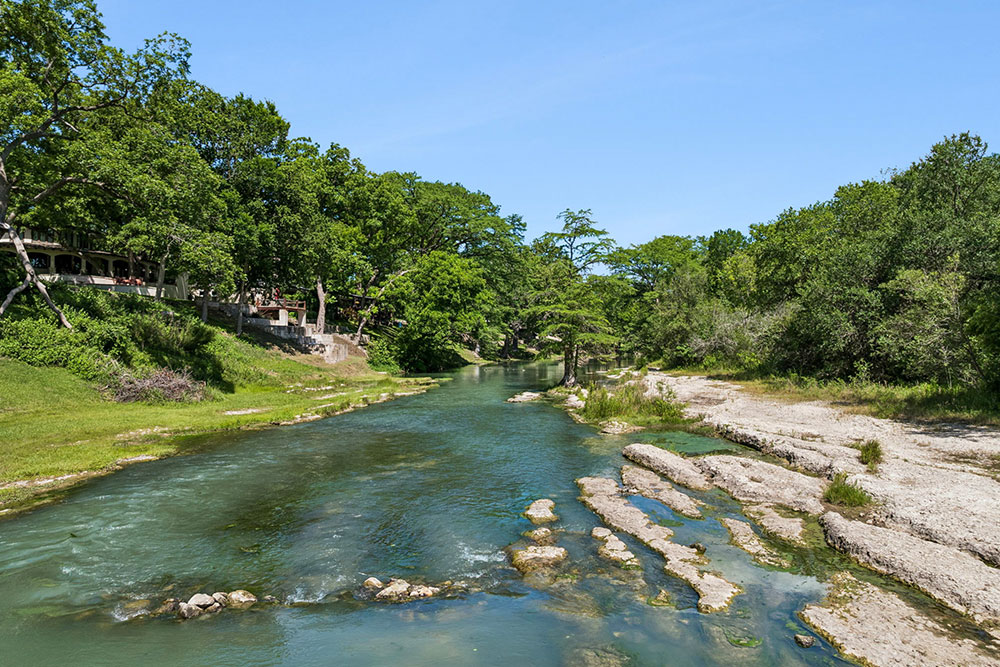
River Houses Are About Flowing Water and a Slower Pace
River buyers are often looking for peace, privacy, and a more natural setting.
Instead of wide open water and boat traffic, many river properties offer a quieter experience. You may have kayaking, fishing, swimming holes, shallow water, rock bottoms, sandy areas, or deep pockets depending on the river and location.
In the Highland Lakes region, popular riverfront options include the Blanco River, San Marcos River, Colorado River, and Pedernales River. Each one has a different feel, which is why local knowledge matters so much.
On the Guadalupe side, the Guadalupe River in New Braunfels and Spring Branch is one of the most recognized riverfront markets in Texas. Some sections are known for tubing and activity, while others are much quieter and more private.
That difference matters.
A buyer looking for action near River Road may not want the same property as someone looking for solitude near the Whippoorwill area below Canyon Dam.
Fishing Can Be a Big River Advantage
For many buyers, fishing is one of the biggest reasons to choose a river house.
The Guadalupe River is especially popular for trout fishing, particularly in the stretches north of New Braunfels below Canyon Lake. It also offers Guadalupe bass, perch, and other fish depending on the location and conditions.
The Llano River is another favorite among many riverfront buyers because of its variety. It has sandy stretches, rocky areas, clearer water, boatable spots, and quiet non boatable sections. For someone who loves exploring different types of water, that variation can be a major draw.
If river lifestyle is high on your list, you may also enjoy reading The 6 Most Desirable Texas Riverfronts for Living and River Living vs Lake Living.
Lake Houses Are About Recreation and Convenience
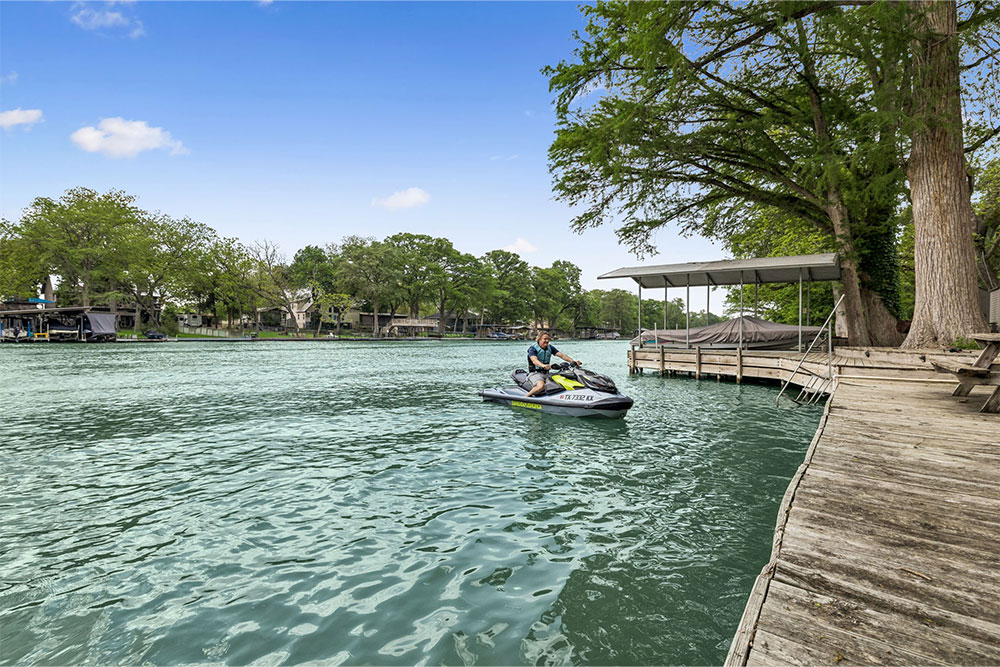
Lake house buyers usually want more usable water for boating and recreation.
If your dream includes wake surfing, skiing, jet skis, pontoons, or spending long summer days on the boat, then lakefront property is usually the better option.
Central Texas gives buyers several types of lake options. Some lakes are constant level lakes, while others are reservoirs that fluctuate based on rainfall, inflows, and drought conditions.
Constant level lakes include places like Lake LBJ, Inks Lake, Lake Marble Falls, Lake Dunlap, Lake McQueeney, and Lake Placid.
Reservoir style lakes such as Lake Travis, Lake Buchanan, and Canyon Lake can offer larger water, beautiful views, and incredible recreation, but buyers need to understand how lake levels can change over time.
For more context, read How Lake Levels Affect Property Values in Central Texas.
Constant Level Lakes vs Fluctuating Lakes
One of the most important decisions for lake house buyers is whether they want constant level water.
Constant level lakes are designed to remain relatively stable, even during drought conditions. That consistency is a major reason buyers are drawn to lakes like LBJ, Dunlap, McQueeney, Placid, Inks, Austin, and Marble Falls.
That does not mean every property is the same. Waterfront quality, depth, location, shoreline usability, and boat access still vary widely.
Fluctuating lakes can also be excellent choices, but the buyer needs to understand what the property looks like during both good water conditions and low water conditions. A property may look incredible when the lake is full, but very different during drought
That is why we often encourage buyers to review historical imagery and understand the worst case scenario before making a decision.
Private Docks Can Change the Decision
Another major difference between lake and river properties is dock usage.
Some lakefront properties allow private docks and boathouses. Others do not.
For example, many buyers love Canyon Lake waterfront homes because of the natural beauty, clear water, and scenic shoreline. But Canyon Lake does not allow private boat docks because of the Army Corps of Engineers rules around the shoreline.
On lakes like LBJ, Travis, Buchanan, Dunlap, McQueeney, and Placid, private dock opportunities are much more common, although every property still needs to be evaluated carefully.
If having your boat directly behind your house matters, that should be part of the search from day one.
Lake Buyers and River Buyers Are Usually Different
One of the most interesting things we see is that lake buyers and river buyers are often very different people.
River buyers may say they do not want the noise, boat traffic, or busyness of a lake. They want nature, privacy, fishing, and flowing water.
Lake buyers may look at a river property and feel like it is too quiet or too limited. They want to get the boat out, use their water toys, entertain guests, and have a more active waterfront lifestyle.
Neither buyer is wrong.
They simply want different things.
That is why the right agent should not force one answer. The goal is to help you identify the waterfront lifestyle that actually fits your family.
Pricing Differences Between Lake and River Homes
Pricing depends heavily on location, water quality, usability, improvements, and demand.
In general, constant level lakefront property tends to command a premium because the water is more predictable and recreational use is strong. However, some riverfront properties in desirable locations can also be highly valuable because of privacy, acreage, scenery, and uniqueness.
Even within lake markets, prices can vary dramatically. On Lake Travis, buyers may get a larger or newer home for the money compared to some areas of Lake LBJ, but Lake LBJ may offer more consistent water and stronger immediate waterfront usability.
That is why comparing lake to river, or even lake to lake, requires more than just looking at price per square foot.
For a broader pricing discussion, read How Much Does a Texas Lake House Cost Average Home Prices by Lake.
Lake House vs River House: Which One Fits Your Lifestyle?
Choose a lake house if you want:
- Boating
- Wake surfing
- Jet skis
- Private docks where allowed
- More open water
- A social waterfront lifestyle
- Constant level options
Choose a river house if you want:
- Flowing water
- Fishing
- Kayaking
- Tubing
- Privacy
- Nature
- A quieter waterfront setting
The best choice is not the one someone else says is best. It is the one that fits how you actually want to live.
Finding the Right Waterfront Property
People ask us all the time which lake or river is best.
The truth is, we could find people on every lake and every river who would swear their spot is the best in Texas.
That is what makes Central Texas waterfront real estate so special. There is no one size fits all answer. There are active lakes, quiet rivers, constant level lakes, fluctuating reservoirs, fishing rivers, tubing rivers, and everything in between.
The key is working with someone who understands the differences and can help you match the right property to your lifestyle.
If you are trying to narrow down your options, The Lakefront Group can help you compare the lakes and rivers across Central Texas so you can find the waterfront property that truly fits the way you want to live.
Ready to Compare Lake and River Properties?
Whether you're considering Lake Dunlap, Lake McQueeney, Lake LBJ, the Guadalupe River, or another Central Texas waterfront location, The Lakefront Group can help you compare your options and find a property that matches the way you want to live.
Contact The Lakefront Group to explore available waterfront homes, including opportunities that may not be publicly listed.
FAQs
What is the main difference between a lake house and a river house?
A lake house usually offers more open water for boating, wake sports, and social activity. A river house focuses more on flowing water, fishing, privacy, and a quieter natural setting.
Are constant level lakes better than fluctuating lakes?
Constant level lakes provide more predictable water conditions and consistent usability for boating and waterfront access. Fluctuating lakes can offer larger water bodies and great views but may change depending on rainfall and drought.
How do I decide between buying on a lake or a river?
The best choice depends on how you want to use the water and spend your time outdoors. Lifestyle preferences like boating, fishing, privacy, and activity level matter more than the location itself.
Posted by Hunter C on
Leave A Comment